6-Minute English
Source: bbc.co.uk/learningenglish
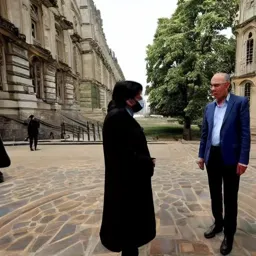
Diseases have always changed the way cities are built; in the 1800s, Paris added large windows to let in sunlight and tried to stop tuberculosis, while London improved its sewer system to fight cholera. The Covid‑19 lockdown showed that when traffic stops, cities become quieter and even the night sky becomes clearer. Today planners are thinking about “15‑minute cities”, where homes, shops and work are close enough to walk to, hoping to lower disease risk. In huge cities like Mumbai – about 20 million people – many workers still live in the centre because moving farther away would mean a costly daily commute and loss of their livelihood. This shows that health, housing and jobs are tightly linked in modern metropolises.
- metropolis
- Definition: The largest, busiest, and most important city in a country or region, often crowded and prone to disease spread.
- Example: Mumbai is described as a metropolis with about 20 million residents.
- airborne
- Definition: Describing a disease that is carried and spread through the air.
- Example: Tuberculosis was difficult to control because it was airborne.
- antibiotics
- Definition: Medicines like penicillin that can destroy harmful bacteria or stop their growth, discovered after many disease deaths.
- Example: Antibiotics were not available until 1928, too late to save many TB victims.
- commute
- Definition: The journey between a person's home and workplace, often involving travel costs.
- Example: Residents avoid moving far from the city centre because they cannot afford the commute.
- livelihood
- Definition: A person's means of earning money to afford food, housing, and clothing.
- Example: Moving people away from the city threatens their livelihood because their jobs are located there.
- Which architectural feature was used in 19th century Paris buildings to try to stop the spread of tuberculosis?
- Large, high‑up windows
- Underground tunnels
- Thick stone walls
- Rooftop gardens
- What is the estimated population of Mumbai as mentioned in the programme?
- 15 million
- 20 million
- 25 million
- 30 million
- Which disease was eliminated in London by redesigning the sewage system in the 1850s?
- Tuberculosis
- Cholesterol
- Cholera
- Smallpox
- In the discussion, what does the phrase “spread like wildfire” mean?
- To spread quickly around many people
- To cause burning injuries
- To spread through water
- To be difficult to detect
- According to Dr Vaidehi Tandel, why might moving people to affordable housing outside the city centre not be effective?
- They will miss the city’s cultural events
- They cannot afford the commute to their jobs
- The housing is too small
- The air quality is worse outside
- Do you think cities will look different after the Covid lockdowns? Why or why not?
- Have you ever lived in a very crowded city? What was your experience?
- Why did architects in the 19th century add large windows to buildings in Paris?
- How might the spread of disease change if people move away from city centres but still need to commute?
- Should governments prioritize building affordable housing outside city centres even if it means longer commutes?
- Is the “15‑minute city” idea realistic for huge metropolises like Mumbai? Explain your view.
- Imagine a city that has completely eliminated the risk of airborne diseases. What would daily life look like?
- If a new airborne disease appeared tomorrow, what redesigns would you suggest for modern cities?
- Do you agree with the statement “disease shapes how we build cities”? Why or why not?
- Rewrite the ending of this BBC programme, adding a solution that helps both health and livelihoods.

Will Covid-19 change cities?
Neil
Hello. This is 6 Minute English from BBC Learning English. I’m Neil.
Rob
And I’m Rob.
Neil
From the bubonic plague to cholera and tuberculosis, disease and pandemics have changed the way cities have been built. For example, buildings in 19th century Paris were designed with large, high-up windows to allow plenty of sunlight. They were supposed to stop the spread of tuberculosis.
Rob
Coronavirus has been no different. In lockdown, cities from Rio to Barcelona were transformed as wildlife and birdsong replaced the noise of taxi horns and traffic. And with no car pollution you could even see the stars at night!
Neil
In this programme we’ll be asking if cities after lockdown will ever be the same again – and if we want them to be.
Rob
We’ll be hearing some ideas from different cities around the world.
Neil
And of course we’ll be learning some new vocabulary along the way. One of the cities most affected by Covid-19 was Mumbai in India – but approximately how many people were affected? What’s the estimated population of Mumbai? That’s my quiz question for you today Rob. Is it:
a) 15 million people?
b) 20 million people? or,
c) 25 million people?
Rob
I know Mumbai is an international mega-city so I’ll say b) 20 million people.
Neil
OK, Rob, we’ll find out later if that’s right. Now, Beatriz Colomina is a professor of architecture at Princeton University in the United States. She’s spent years researching the relationship between cities and disease. Here she is talking with Kavita Puri, presenter of BBC World Service programme,
The Inquiry
:
Kavita Puri
Take tuberculosis. Unlike cholera, which was eliminated in London by re-designing the sewage system in the 1850s, TB was
airborne
.
Professor Colomina
It became a real problem with the rise of the industrial cities, the
metropolis
, before an
antibiotic
was effective.
Kavita Puri
One in seven people on the planet had TB, but in dense cities like Paris, it was one in three. Closely packed tenements meant the disease
spread like wildfire
and architects and planning experts responded.
Rob
Some diseases, like cholera, could be prevented by redesigning cities to improve hygiene, like the waste water sewers in 19th century London. But the problem with tuberculosis, or TB for short, was that the disease is
airborne
– carried and spread in the air.
Neil
Adding to the problem was the fact that
antibiotics
– medicines like penicillin that can destroy harmful bacteria or stop their growth – was not discovered until 1928 – too late to save the thousands of people who died in Mumbai, New York, Paris and other cities during the 1800s.
Rob
Diseases like TB killed more and more people as cities industrialised and grew bigger and bigger, leading to the creation of the
metropolis
– the largest, busiest and most important city in a country or region.
Neil
Many people crowded together in large
metropolises
meaning that disease could
spread like wildfire
– an idiom meaning spread quickly around many people.
Rob
Even today disease is shaping our cities. In post-Covid Paris, new ideas for a ’15 minute city’ aim to make all public services available within a fifteen minute walk to help people working from home.
Neil
Other countries want to build better, more affordable housing outside the city centre.
Rob
But according to Mumbai resident Dr Vaidehi Tandel this won’t work – even if the housing on offer is better. But why? The reason is work.
Dr Vaidehi Tandel
When you shift them out, you’re moving them away from their
livelihoods
and they’re not going to be able to sustain themselves there so they will be coming back because their jobs are in the city and they cannot afford the
commute
from further off places.
Rob
Dr Vaidehi Tandel there, talking on the BBC World Service programme The Inquiry.Trying to make cities less crowded is one way to minimise the risks from disease. But moving people away from the city centre means moving them away from their
livelihood
– their job or other way of earning money to pay for food, housing and clothing.
Neil
Many people still want to live near their workplace in the city centre because they can’t afford to pay for the
commute
– the journey between their home and their place of work.
Rob
Which is real problem when you live in a city of… how many people did you say live in Mumbai, Neil?
Neil
Ah yes, in our quiz question I asked you what the estimated population of Mumbai is.
Rob
I said b) 20 million.
Neil
And you were absolutely right! Around 20 million people live in the Mumbai
metropolis
, making it very difficult to socially distance.
Rob
In this programme we’ve been discussing the relationship between cities and disease. In the 1800s, tuberculous, or TB, killed thousands because it was an
airborne
disease – spread in the air, and hard to prevent.
Neil
Antibiotics
– medicinal chemicals like penicillin which can destroy harmful germs, couldn’t help because they weren’t discovered until decades later.
Rob
So in
metropolises
– the largest and most important cities, where people live crowded close together, diseases
spread like wildfire
– an idiom meaning spread widely and quickly.
Neil
In Mumbai and other places, the problem remains that many people need the city for their
livelihood
– job or other way of earning money.
Rob
So they prefer to live in the city centre instead of paying for the daily
commute
– a journey, often by train, bus or car, from your home to your workplace.
Neil
That’s all we have time for in this programme, but remember you can find more useful vocabulary, trending topics and help with your language learning here at BBC Learning English. Bye for now!
Rob
Bye!


