American Culture and Customs
Source: rong-chang.com
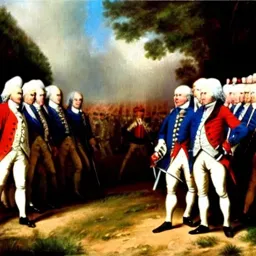
The American Revolution was a war in which the 13 colonies in North America fought to become free from Great Britain. The colonists were angry because Britain taxed them – like the stamp tax and the tea tax – without giving them any representatives in the British Parliament. Patriots, who wanted independence, protested with actions such as the Boston Tea Party and eventually began fighting in Lexington and Concord in 1775. With leaders such as Benjamin Franklin, Thomas Jefferson, John Adams, and General George Washington, the colonies declared independence in 1776 and later received help from France, which helped defeat the British at Yorktown. The war officially ended in 1783 when the Treaty of Paris recognized the United States as an independent nation.
- taxation
- Definition: the practice of the British government imposing taxes on the colonies, which colonists considered unfair.
- Example: The colonists protested the new taxation by refusing to buy British goods.
- representation
- Definition: the presence of colonial voices in the British parliament, which the colonists lacked.
- Example: Their anger grew because there was no representation for the colonies in Parliament.
- Patriots
- Definition: colonists who fought for independence from English rule.
- Example: The Patriots organized the Boston Tea Party to oppose British taxes.
- Loyalists
- Definition: colonists who remained supportive of British authority during the conflict.
- Example: Loyalists opposed the rebellion and argued for continued ties to Britain.
- Treaty
- Definition: the formal agreement that ended the war and recognized the United States as an independent nation.
- Example: The Treaty of Paris in 1783 marked the official conclusion of the American Revolution.
- What slogan summed the colonists' complaint about taxes?
- No taxation ever
- Taxation without representation
- Give us liberty
- Join the British
- Which tax was applied to printed materials such as newspapers?
- Tea tax
- Stamp tax
- Sugar tax
- Land tax
- How many chests of tea did Bostonians dump into the harbor during the protest?
- 100
- 342
- 500
- 750
- On what date were the first shots of the American Revolution fired at Lexington and Concord?
- July 4, 1776
- April 19
- December 25, 1775
- March 15, 1777
- Which group of soldiers assisted the British and were called Hessians?
- French allies
- German mercenaries
- Native American warriors
- Irish volunteers
- Do you think it was fair for the British to tax the colonies without giving them a voice in Parliament? Why or why not?
- Have you ever felt a rule was unfair because you could not help make it? Share your experience.
- What might have happened if the Boston Tea Party had never occurred?
- Why do you think France decided to help the American colonists in 1778?
- Some people call the Patriots heroes, while others say the Loyalists were just loyal to their country. Who should be praised more? Explain.
- Should a country be allowed to use force to keep its colonies, or should the colonies always have the right to become independent? Why?
- Imagine you are a journalist in 1776. Write a short headline about the Declaration of Independence.
- If the Hessian soldiers had not fought for the British, how might the war have changed?
- How important do you think the Treaty of Paris was for the new United States? Give a reason.
- If you could ask George Washington one question about his role in the war, what would you ask?

A Nation Was Born
The American Revolution was a war of independence fought by those living in the 13 colonies of North America against Great Britain. Those living in the colonies were especially angry about taxes the British were forcing them to pay. People felt taxes were unfair because there was no colonial representation in the British parliament. One tax was the stamp tax, which taxed printed materials such as newspapers. The colonists called this "taxation without representation". Colonists who wanted freedom from English rule were known as Patriots. Those who supported British rule were known as Loyalists. Before full scale war broke out, there were many acts of protest by patriots, like the Boston Tea Party when Bostonians boarded British ships and dumped 342 chests of tea into the harbor because of a tea tax. On April 19 the first shots were fired in Lexington and Concord, Massachusetts, which officially started the war.
Many people were involved in the struggle for independence. Benjamin Franklin, Thomas Jefferson, and John Adams worked together to write the Declaration of Independence. On July 4, 1776, patriots declared themselves free. Most people know George Washington was the first president of the United States. Before that he was the commander-in-chief of the patriot army. Most of the battles in the American Revolution were fought in the northeast in places near Boston, and New York.
The British, known as redcoats because of their red uniform jackets, had help from German mercenary soldiers called Hessians. Patriots had support from other Europeans. France entered the American Revolution on the side of the colonists in 1778. This helped force the British surrender at Yorktown, Virginia, in 1779. However, fighting would not formally end until 1783 with the Treaty of Paris when Great Britain recognized the United States as an independent nation.


